
Tissue-Blot Enzyme Immunoassay for the massive diagnosis of Leifsonia xyli subsp. xyli in sugarcane (Saccharum spp.) in Cuba
Article Sidebar
Main Article Content
Abstract
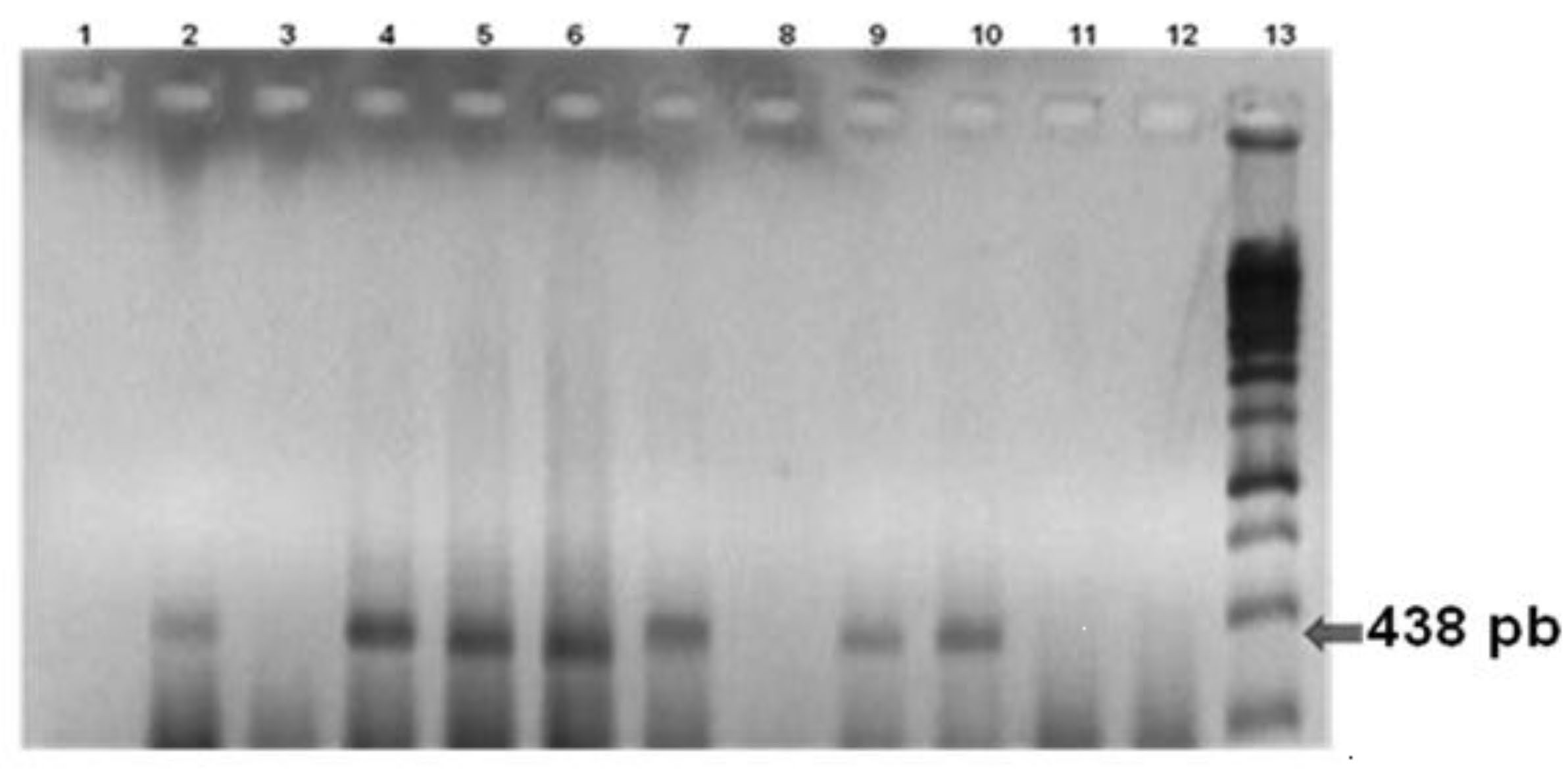
External and internal symptoms caused by the bacterium Leifsonia xyli subsp. xyli in sugarcane are unspecific, therefore not suitable for its identification. The aim of this work was to standardize and validate the tissue blot immuno-assay technique (TBIA) for the massive diagnosis of the bacterium in this crop. To this purpose cultivars CP31-294 (infected) and My5514 (bacterium free) were selected. Different dilutions were of the specific anti L. xyli subsp. xyli (goat) and the anti goat alkaline phosphatase were proven. One hundred forty cylinders of sugarcane stems were used (70 positive and 70 negative) to validate the TBIA technique by with to Polymerase Chain Reaction (PCR) technique. The standardization of TBIA for diagnostic was achieved with the specific antibody diluted 1/3000 and the conjugate diluted 1/800. The validation indicators showed the high correspondence between diagnosed samples from TBIA and PCR. This result showed that TBIA technique may be used as a method for the detection of this bacterium in sugarcane, allowing to analyze a great number of samples in a short time with less cost and high reliability.
Article Details

This work is licensed under a Creative Commons Attribution-NonCommercial 4.0 International License.
Those authors who have publications with this journal accept the following terms of the License Attribution-NonCommercial 4.0 International (CC BY-NC 4.0):
You are free to:
- Share — copy and redistribute the material in any medium or format
- Adapt — remix, transform, and build upon the material
The licensor cannot revoke these freedoms as long as you follow the license terms.
Under the following terms:
- Attribution — You must give appropriate credit, provide a link to the license, and indicate if changes were made. You may do so in any reasonable manner, but not in any way that suggests the licensor endorses you or your use.
- NonCommercial — You may not use the material for commercial purposes.
- No additional restrictions — You may not apply legal terms or technological measures that legally restrict others from doing anything the license permits.
The journal is not responsible for the opinions and concepts expressed in the works, they are the sole responsibility of the authors. The Editor, with the assistance of the Editorial Committee, reserves the right to suggest or request advisable or necessary modifications. They are accepted to publish original scientific papers, research results of interest that have not been published or sent to another journal for the same purpose.
The mention of trademarks of equipment, instruments or specific materials is for identification purposes, and there is no promotional commitment in relation to them, neither by the authors nor by the publisher.
How to Cite
References
Aday, O.; M. La O; M. Zardón; E. Rodríguez; J. Mesa; Y. Puchades; J. Delgado; F. Díaz. 2014. Distribución del virus de la hoja amarilla de la caña de azúcar en Cuba. Revista Protección Vegetal. ISSN 1010-2752. Volumen 29 (3): 177-184.
Alvez B.; M. Oropeza; G. Alonso. 2016. Leifsonia xyli subsp. xyli, patogeno de la caña de azúcar en Venezuela agente causal del raquitismo de los retoños de la caña de azúcar. España. Editorial Academica Espanola, ISBN 978-3-659-70296-9. 120 p.
Franco, L.; C. Andrés; M. Guzmán. 2009. “Detección del virus PVX, PVS, PVY y PLRV en la colección central colombiana de papa por medio de la técnica inmuno (IMI)”. Facultad de Ciencias Básicas. ISSN 1900-4699. Volumen 5 (1): 130-139.
Fontana, P.; V. Di; R. Sopena. 2013. Cultivo de caña de azúcar. La gaceta. Argentina, marzo 22: 12 p.
Funes, C.; R. Bertani; I. Cazón; C. Kairuz; V. González; L. Ploper. 2012. “Estado sanitario de lotes comerciales de caña de azúcar destinados a la obtención de caña semilla durante el periodo 2008–2011 en Tucumán, R. Argentina”. EEAOC. Avance Agroindustrial. Argentina. 33 (1): 8-12.
Garcés, F.; F. Fiallos; J. Mendoza; E. Silva; R. Castillo; M. Valdez; I. Viteri. 2013. Manejo preventivo del raquitismo de la soca (Leifsonia xyli subsp xyli), escaldadura de la hoja (Xanthomonas albilineans) y la hoja amarilla (Sugarcane yellow leaf virus, SCYLV) de la caña de azúcar (Saccharum spp.) en Ecuador. Memorias del III Congreso AETA, Guayaquil-Ecuador. Septiembre 18 al 20 del 2013: 26 p.
García, J. 2014. Diagnóstico de Xanthomonas albilineans (Ashby) Dowwon y Leifsoniaxylisubsp. xyli en caña de azúcar en la Chontalpa. Tabasco. Tesis (en opción al título académico de Máster en Ciencias, especialista en Producción Agroalimentaria en el Trópico). Colegio de Postgraduados México. 79 p.
Iglesia, A.; M. Díaz; M. Ramos. 2011. “Validación de técnicas para el diagnóstico del raquitismo en los retoños de la caña de azúcar en Cuba”. ATAC (CU). ISSN 0138-7553 (3): 18-23.
Monteiro, M. 2013. Termoterapia asociada al cultivo de tejidos para la obtención de plantas de caña de azúcar de la variedad SP80-3280 libres de Leifsonia xyli subsp. xyli. Sao Paulo. Tesis (en opción al título académico de Máster en Agronomía), Universidad Sao Paulo. 76 p.
Peña, I.; J. Pérez; D. López; L. Batista. 2010. Principales enfermedades virales y afines de los cítricos. European Journal of Plant Pathology. (110): 175-190.
Peralta, E.; A. Villoch. 1999. Validación de ensayos inmunoquímicos y moleculares utilizados para el diagnóstico de fitopatógenos. Resúmenes del XXVI Congreso Nacional de la Sociedad Mexicana de Fitopatología y X Congreso de la Asociación Latinoamericana de Fitopatología. Guadalajara, México.
Pérez, H.; I. Santana; I. Rodríguez. 2013. Manejo sostenible de tierras en la producción de caña de azúcar. La Habana, Cuba. 290 p.
Rufin, Y. 2011. Raquitismo de los retoños de la caña de azúcar: Resistencia varietal y comparación de métodos de evaluación. La Habana. Tesis (en opción al título académico de Máster en Sanidad Vegetal). Universidad Agraria de La Habana. 58 p.
Santana, I.; M. González; R. Crespo; S. Guillen. 2014. Instructivo técnico para el manejo de la caña de azúcar. La Habana. INICA. 302 p.
Sepúlveda, P. 2013. “Trasmisión de virus por semillas”. Tierra Adentro. NR25776 (2): 18-21.
Silva, H. 2013. “Enfermedades bacterianas asociadas a caña de azúcar”. México. Revista Mexicana de Fitopatología. Vol. (31) (Suplemento): 63-64.
Taher, K. 2010. Bases metodológicas para el manejo integrado del raquitismo de los retoños de la caña de azúcar en Irán. Santa Clara. Tesis (en opción al grado científico de Doctor en Ciencias Agrícolas), Universidad Central de las Villas. 107 p.
Zardón, M.; A. Gallo; J. Mesa; A. Arencibia; L. Zamora; Y. Martínez; M. Sautié; M. Casas; M. La O. 2012. “Detección de infecciones mixtas en genotipos de caña de azúcar en Cuba”. Revista Protección Vegetal. Vol. 27 (2): 77-84.