
Bioregulators arthropods of Lantana camara L. (Verbenaceae) in Cuba
Article Sidebar
Main Article Content
Abstract
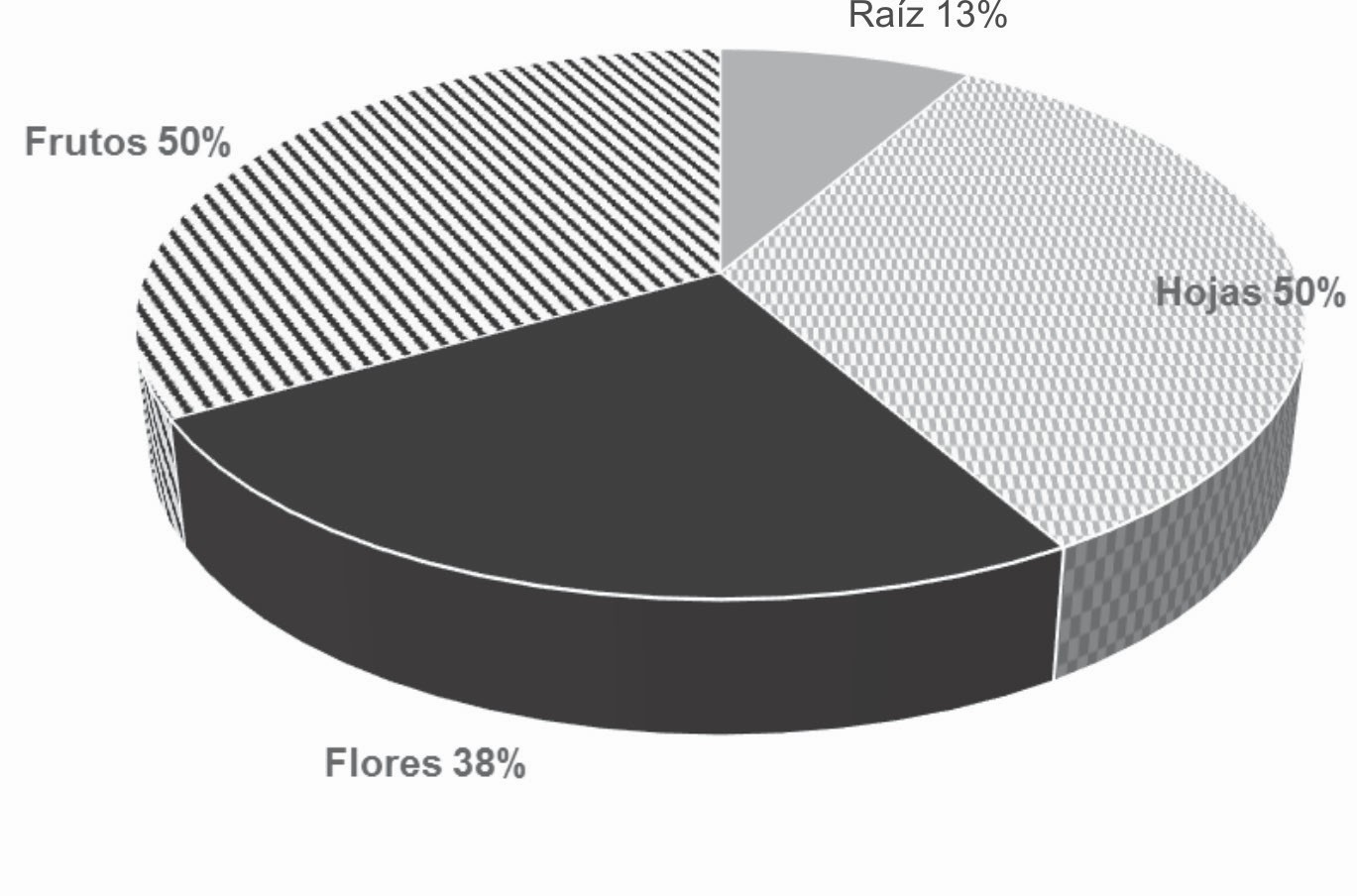
With the objective to determine the natural regulators of Lantana camara L.,a study was carried out in the period december 2001-april 2003 in different ecosystems of the western and eastern region of Cuba. The sampling was carried out during the day, for which the different parts of the plant were reviewed. The collected arthropods were examined and identified in laboratory conditions. Eight species of bioregulators arthropods were registered, grouped into five orders, six families and seven genera. The species with the greatest distribution in the provinces evaluated were: O. camarae (100 %), L. columbicus (78 %), E. lantanae (78 %) and T. escrupulosa (67 %). The provinces with the highest number of bioregulators were Mayabeque, Artemisa and Las Tunas, mainly in grasslands. Varieties of L. camara with pink and orange flowers were identified, of which 63 % of the natural regulators interacted with both varieties. 50 % of arthropods feed on leaves and fruits, 38 % of flowers and 13 % of roots.
Article Details

This work is licensed under a Creative Commons Attribution-NonCommercial 4.0 International License.
Those authors who have publications with this journal accept the following terms of the License Attribution-NonCommercial 4.0 International (CC BY-NC 4.0):
You are free to:
- Share — copy and redistribute the material in any medium or format
- Adapt — remix, transform, and build upon the material
The licensor cannot revoke these freedoms as long as you follow the license terms.
Under the following terms:
- Attribution — You must give appropriate credit, provide a link to the license, and indicate if changes were made. You may do so in any reasonable manner, but not in any way that suggests the licensor endorses you or your use.
- NonCommercial — You may not use the material for commercial purposes.
- No additional restrictions — You may not apply legal terms or technological measures that legally restrict others from doing anything the license permits.
The journal is not responsible for the opinions and concepts expressed in the works, they are the sole responsibility of the authors. The Editor, with the assistance of the Editorial Committee, reserves the right to suggest or request advisable or necessary modifications. They are accepted to publish original scientific papers, research results of interest that have not been published or sent to another journal for the same purpose.
The mention of trademarks of equipment, instruments or specific materials is for identification purposes, and there is no promotional commitment in relation to them, neither by the authors nor by the publisher.
How to Cite
References
Amela T., Aquino D., Bouza A., Grohar M. C., Herrera A. N, la Fuente M., Miguez M. B., Scorza V. & Chamer M., 2019. Sistema reproductivo y biología floral de Lantana camara (Verbenaceae) en una población ribereña del río de La Plata. Bol. Soc. Argent. Bot. 54, 29-42.
April V., Roberson M. P., Simelane D. O., 2011. Interaction between Uroplata girardi (Coleoptera: Chrysomelidae) and Ophiomyia camarae (Diptera: Agromyzidae) on a shared host Lantana camara (Verbena- ceae). Environ Entomol. 40, 1123-30.
Baars J., 2001. Biology and laboratory culturing of the root-feeding flea beetle, Longitarsus columbicus columbicus Harold, 1876 (Chrysome- lidae: Alticinae): a potential natural enemy of Lantana camara L. (Verbenaceae) in South Africa. Entomotrópica. Boletín de Entomología Venezolana. 16, 149-155. http://www.entomotropica.org/.
Baars J. R y Neser S., 1999. Past and present initiatives on the biological control of Lantana camara (Verbenaceae) in South Africa. Biological con- trol of weeds in South Africa (1990-1998). African Entomology 1, 21-33.
Bhagwat S. A., Breman E., Thekaekara T., Thornton T. and Willis K., 2012. A battle lost? Report on two centuries of invasion and mana- gement of Lantana camara L. in Australia, India and South Africa. PLoS ONE, 7(3):e32407. http://www.plosone.org/article/info%3A- doi%2F10.1371%2Fjournal.pone.0032407.
CABI., 2019. Invasive Species Compendium. https://www.cabi.org/isc/datasheet/29771#tonotesOnNaturalEnemies.
Carmenate H. G., Pérez E., Paredes E. y Blanco P., 2008. Biología reproductiva de Dichrostachys cinerea (L.) Wight & Arn (marabú). (II) Evaluación de reproducción por porciones de tallos y raíces. Fitosanidad 12, 79-82.
Casamayor R., Guerrero E., Armas M. C. y Naranjo A.,1993. Lantana camara L., sus hábitos y posibilidades de control en las plantaciones de cítricos. Levante Agrícola. Revista Internacional de Cítricos. 32, 64-71.
Colmenarez Y., 2015. Desafíos y perspectivas para la implementación del control biológico en la región neotropical. Rev. Protección Veg., vol. 30 (número especial).
Day M.D., Neser S., 2000. Factors influencing the biological control of Lantana camara in Australia and South Africa. In: Spencer, N.R. (Ed.). Proceedings of the X International Symposium on the Biological Control of Weeds. Bozeman, Montana, USA, pp. 897-908.
De la Torre P., Almaguel L. y Pérez E., 1999. Eriophyes Lantanae Cook. (Acari: Eriophyidae), en Lantana camara L. en Cuba. I Encuentro Nacional de Ciencias de Malezas. La Habana, Cuba, p. 5-6.
De la Torre P., Almaguel L. y Pérez E., 2004. Eriophyes lantanae Cook (Acari:Eriophyidae) en Lantana camara L. en Cuba. Fitosanidad. 8,
-68.
Demetriou J., Kazilas C., Koutsoukos E., & Kalaentzis, K., 2020. Α new tropical invader in Greece: The lantana plume moth Lantanophaga pusillidactylus (Lepidoptera: Pterophoridae). Entomologia Hellenica, 29, 1-7.
ISSG, 2015 Global Invasive Species Database (GISD). Invasive Species Specialist Group of the IUCN Species Survival Commission. http:// www.issg.org/database/welcome/
Julien, M. H., 1992. Biological Control of Weeds: A World Catalogue of Agents and their Target Weeds. 3ra edición. Wallingford, UK: CAB International, 848 p.
Marrero, Eva; H. A, Alfonso; V. R. Fuentes; Rebeca Tablada; Luz María Sánchez; Iris Palenzuela; C. Aníbal. Plantas tóxicas en el trópico. Editorial Capitán San Luis, La Habana, Cuba. 438p. 2010.
Matienzo Y., Ramos B., Rijo E., 2003. Revisión bibliográfica sobre Lanta- na camara L.: una amenaza para la ganadería. Fitosanidad. 7, 45-55.
Motooka P., Castro L., Nelson D., Nagai G. and Ching L., 2002. Weeds of pastures and natural areas of Hawaii and their management. In press. http://www.hear.org/pier/lacam.htm (12/3/2003).
Mukwevho L., Olckers T., Simelane D. O., 2018. Occurrence of different Lantana camara varieties across four South African provinces and their susceptibility to a biotype of the gall-forming mite Aceria lantanae. Biocontrol Science and Technology. 28, 1-11.
Salazar D. J y Segovia L., 2012. Estudio de caso de los efectos toxico- lógicos de las hojas de la planta 5 negritos (Lantana camara L.) en ovinos: Universidad Nacional Agraria, UNA. Managua, Nicaragua. Tesis de Licenciatura. 35 p.
Telkar S. G., Gurjar G. N., Dey J. K., Kant K. and Pratap S., 2015. Singh Solanki. Biological Weed Control for Sustainable Agriculture. Interna- tional Journal of Economic Plants. 2, 181-183.
Urban A. J., Simelane D.O, Retief E., Heystek F., Williams H. E., Madire L. G., 2011. The invasive “Lantana camara L”. hybrid complex (Ver- benaceae): a review of research into its identity and biological control in South Africa. African Entomology 19, 315-348.
Varga, B., Pupo; Lilien Y. G., Puertas A., Rizó M., 2015. Diversidad de insectos asociada a Lantana camara L. (rompecamisas) en localida- des agrícolas de Santiago de Cuba, Cuba. Investigación y saberes. IV, 17-28.
Winder J. A., 1984. Uroplata lantanae Buzzi & Winder (Coleoptera: Chry- somelidae: Hispanae) a potential control agent of Lantana camara in Australia. Bulletin of Entomological Research. 74, 327-340.