
Información primaria de la presencia del género tospovirus en Cuba
Article Sidebar
Main Article Content
Abstract
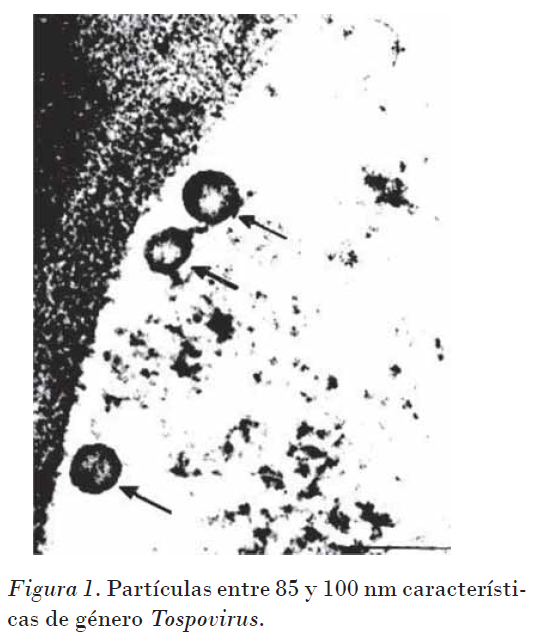
Surveys were made on plantations of tobacco, vegetables, ornamental and fruit trees in different municipalities of some Cuban provinces during the years 2003-2009, with the objective of determining the presence and the extent of a viral etiology disease characterized by symptoms similar to those caused by the genus Tospovirus, because several species of Tospoviruses are included in Cuban Republic Quarantining Pest Official List. The diagnostic techniques applied on collected samples were mechanical inoculation to indicator plants, electron microscopic examinations of tissue sections and transmission assays with trips. Symptoms of yellows, necrotic spots, bronzing, severe necrosis, wilting and sometimes plants death on tobacco, tomato, pepper, papaya and ornamental, were reproduced in these same host by mechanical inoculation. The indicator plants of Nicotiana glutinosa L. and Chenopodium quinoa Willd., reacted with local necrotic lesions, whereas in Nicotiana tabacum L. var. Criollo, a severe necrosis were observed. The trips Frankliniella schultzei Tryborn transmitted this virus efficiently. Membrane-bounded tospovirus-like particles of 85-100 nm in diameter, within endoplasmic reticulum cisternae were consistently found in infected tissues. All these information indicate that the disease observed in the survey area was viral in nature and caused by one or more Tospoviruses. This is the first report of Tospovirus presence in Cuba. Addition works are under way to identify which species of Tospoviruses are present.
Article Details

This work is licensed under a Creative Commons Attribution-NonCommercial 4.0 International License.
Those authors who have publications with this journal accept the following terms of the License Attribution-NonCommercial 4.0 International (CC BY-NC 4.0):
You are free to:
- Share — copy and redistribute the material in any medium or format
- Adapt — remix, transform, and build upon the material
The licensor cannot revoke these freedoms as long as you follow the license terms.
Under the following terms:
- Attribution — You must give appropriate credit, provide a link to the license, and indicate if changes were made. You may do so in any reasonable manner, but not in any way that suggests the licensor endorses you or your use.
- NonCommercial — You may not use the material for commercial purposes.
- No additional restrictions — You may not apply legal terms or technological measures that legally restrict others from doing anything the license permits.
The journal is not responsible for the opinions and concepts expressed in the works, they are the sole responsibility of the authors. The Editor, with the assistance of the Editorial Committee, reserves the right to suggest or request advisable or necessary modifications. They are accepted to publish original scientific papers, research results of interest that have not been published or sent to another journal for the same purpose.
The mention of trademarks of equipment, instruments or specific materials is for identification purposes, and there is no promotional commitment in relation to them, neither by the authors nor by the publisher.
How to Cite
References
Ávila, A. C. de: «Diversity of tospoviruses», Ph.D. Thesis, Wageningen Agricultural University. Holanda, 1992.
Ávila, A. C. de; P. de Haan; M. L. L. Smeets; R. de O. Resende; R. Kormelink; E. W. Kitajima; R. W. Goldbach; D. Peters: «Distinct Levels of Relationships Between Tospovirus Isolates», Arch. Virol. 128 (3-4): 211-227, Alemania, 1993.
Francki, R. I. B.; C. M. Fanquet; D. L. Knudson; F. Brown: «Classification and nomenclature of viruses», Arch. Virol. 2 (1): 450 (Suppl.), Alemania.
Granval de Millán, Nélida: «Nuevas fuentes de infección de los Tospovirus que afectan hortalizas, en Mendoza, Argentina», tesis de Maestría, posgrado en Horticultura, INTA-FCA, Facultad de Ciencias Agrarias, Mendoza, Argentina, 1999.
Hassani-Mehraban, A.; M. Botermans; J. T. Verhoeven; E. Meekes; J. Saaijer; D. Peters; R. Goldbach; R. A. Kormelink: «A Distinct Tospovirus Causing Necrotic Streak on Alstroemeria sp. in Colombia», Arch. Virol. 155 (3): 423-428, Alemania, 2010.
Hanssen, M. I.; M. Lapidot.; B. P.Thomma: «Emerging Viral Diseases of Tomato Crops», Current Review 23 (5): 539-548, EE. UU., 2010.
Mound, L. A.: «The Thysanoptera Vector Species of Tospoviruses», Acta Horticulturae 431: 298-309, Holanda, 1996.
Moyer, J. W.; T. German; J. L Sherwood; Diane Ullman: «An Update on Tomato Spotted Wilt Virus and Related Tospoviruses», Plant Pathology On Line. Disponible en: http://www.apsnet.org/publications/apsnetfeatures/Pages/TomatoSpotted.aspx (consultado en mayo del 2007).
Peters, D.: «An Updated List of Plant Species Susceptible to Tospoviruses and Thrips», Recent Progress: Fourth International Symposium on Tospoviruses and Thrips in Floral and Vegetable Crops. Wageningen, Holanda, mayo 2-6, 1998, pp. 109-111.
Pottorff, L. P.; S. E. Newman: «Greenhouse Plant Viruses (TSWV/INSV) No. 2.947», Gardening Series, Colorado State University Cooperative Extension 2001. Disponible en www.dahlias.net/dahwebpg/Disease/Disease.htm (consultado en mayo del 2006).
Pourrahim, R.; S. H. Farzadfar; A. A. Moini; N. Shahraeen: «First Report of Tomato Spotted Wilt Virus in Potatoes in Iran», Plant Dis. 85: 442, EE. UU., 2001.
Resende, R. de O.: «Generation and Characterization of Mutants of Tomato Spotted Wilt virus», Ph.D. Thesis, Wageningen Agricultural University, Holanda, 1993.
Resende, R. de O.: «Diversidade de Tospovirus no mundo», Fitopat. Bras. 20: 656-657, Brasil, 1995.
Tedeschi, R.; M. Ciuffo; G. Mason; P. Roggero; L. Tavella: «Transmissibility of Four Tospoviruses by a Thelytokous Population of Thrips tabaci from Liguria, Nothwestern Italy», Phytoparasitica 29: 37-45, Alemania, 2001.