
Xiphinema basiri Siddiqi a potential threat for the tomato crop (Solanum lycopersicum L.) in protected crop systems
Article Sidebar
Main Article Content
Abstract
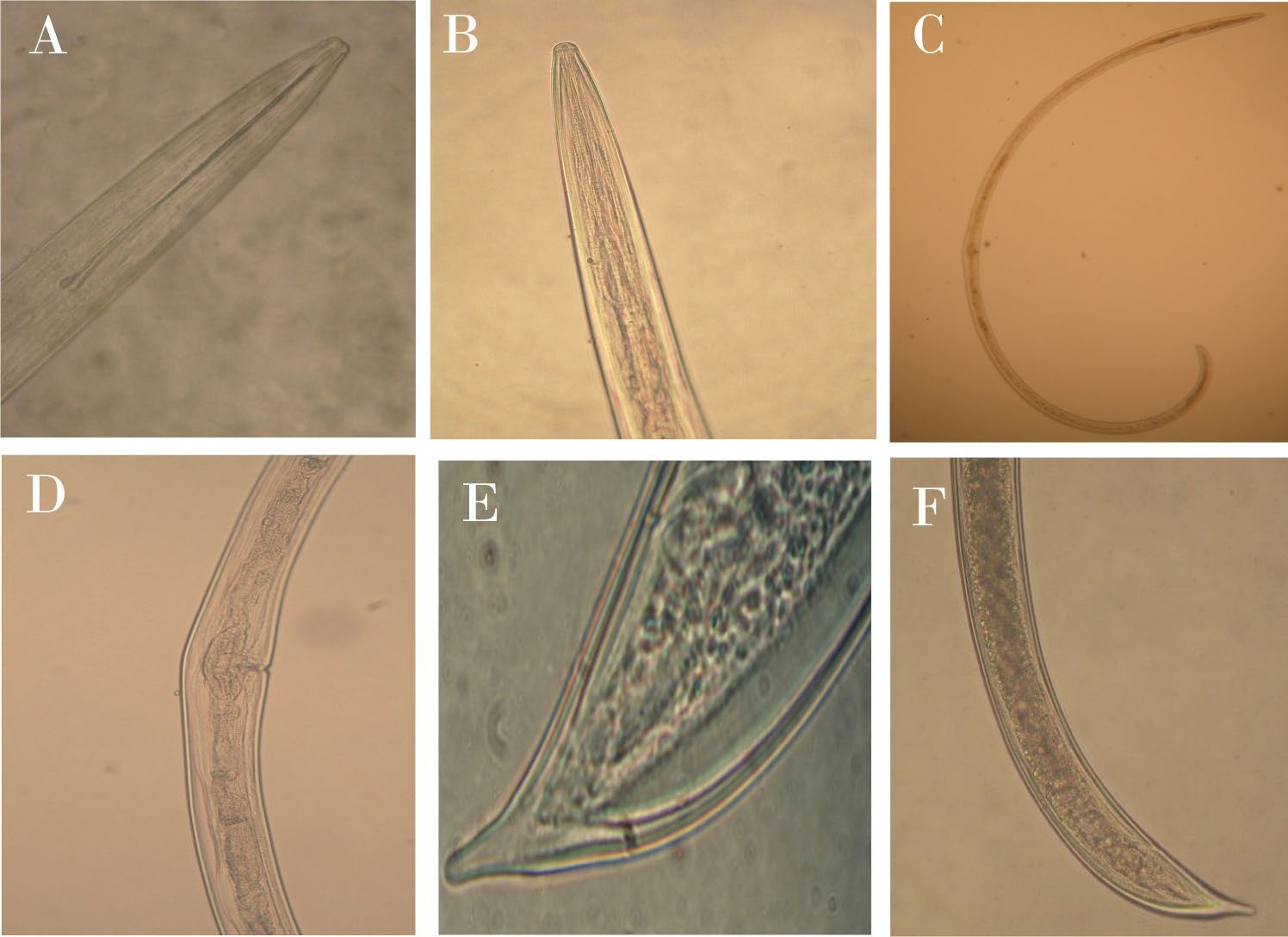
Since the establishment of protected crops species of the genus Meloidogyne have been considered the main problem, while Rotylenchulus reniformis is detected in isolated areas. The objective of the work was to determine the nematodes associated with an atypical symptom in tomato roots of LTM-12 variety in protected crops of one locality of Havana province. Plants with symptoms of wilting and poor growth, whose roots had typical galls to Meloidogyne and others with swelling, mainly at the ends were sampled. The roots were observed at stereomicroscope and the soil was processed by Baermann funnels. In the roots with swelling at the ends, slits in the tips were noted and no Meloidogyne specimens were observed. Between 650 and 900 specimens of the genus Xiphinema per 100 g soil. Specimens of Xiphinema were characterized by two symmetrical genital branches, a Z pseudo organ present, tail short conical and digitate, c’radio between 1,12 and 1,18, vulva position between 53 and 58 %, spear length of 190 to 195 μm,body length between 2,8 and 3,1 mm, body in C or J shape, lip region separated from the body by a weak constriction, tail shape of juvenile stage similar to adult female and unknown males in the population; these data indicate that the associated specie is Xiphinema basiri Siddiqi. According to observed damages and possibilities to confuse with some of the symptoms caused by root-knot nematode, it is recommended to continue distribution studies in different areas of protected crops and evaluate the susceptibility of other hybrid overlooking alert technicians and producers.
Article Details

This work is licensed under a Creative Commons Attribution-NonCommercial 4.0 International License.
Those authors who have publications with this journal accept the following terms of the License Attribution-NonCommercial 4.0 International (CC BY-NC 4.0):
You are free to:
- Share — copy and redistribute the material in any medium or format
- Adapt — remix, transform, and build upon the material
The licensor cannot revoke these freedoms as long as you follow the license terms.
Under the following terms:
- Attribution — You must give appropriate credit, provide a link to the license, and indicate if changes were made. You may do so in any reasonable manner, but not in any way that suggests the licensor endorses you or your use.
- NonCommercial — You may not use the material for commercial purposes.
- No additional restrictions — You may not apply legal terms or technological measures that legally restrict others from doing anything the license permits.
The journal is not responsible for the opinions and concepts expressed in the works, they are the sole responsibility of the authors. The Editor, with the assistance of the Editorial Committee, reserves the right to suggest or request advisable or necessary modifications. They are accepted to publish original scientific papers, research results of interest that have not been published or sent to another journal for the same purpose.
The mention of trademarks of equipment, instruments or specific materials is for identification purposes, and there is no promotional commitment in relation to them, neither by the authors nor by the publisher.
How to Cite
References
Almarales, M. y H. Gandarilla: «Citrus sinensis (L.) Osbeck, nuevo hospedante de Xiphinema basiri Siddiqi en Cuba», Fitosanidad, 15(3): 185-186, 2011.
Babu, R. S y T. S. Muthukrishan: «Studies on the Pathogenicity of Xiphinema basiri on Tomato and Brinjal», Nematología Mediterránea 18 (1):7, 1990.
Bleve-Zacheo, T.; G. Zacheo y C. E. Taylor: «A comparison of histological changes induced by Xiphinema basiri and X. ifacolum in the roots of tomato», Nematología Mediterránea, 15: 239-251, 1987.
Cuadra, R.: «Incidencia de nemátodos fitoparásitos en el cultivo del tomate en las provincias de La Habana y Granma, Cuba», Ciencias de la Agricultura, 27: 25-32, 1986.
Cuadra, R. y Razjivin, A.: «Fitonemátodos del tomate en algunas zonas de la provincia de La Habana, Ciencias de la Agricultura, 11: 3-13, 1982.
Fernández, M.; J. Ortega: Lista de nematodos fitoparasíticos de Cuba, Ed. Científico-Técnica, La Habana, 1986.
García, O.: «Métodos de extracción de nemátodos del suelo y tejido vegetal», Información Técnica, no. 4, Cuba, 1979.
González, F. M.: «El injerto herbáceo en el cultivo protegido del tomate (Solanum lycopersicum L.) como táctica para el manejo de Meloidogyne incognita (Kofoid y White) Chitwood raza 2», tesis en opción al grado científico de Doctor en Ciencias Agrícolas, Universidad Agraria de La Habana, Cuba, 2014.
Gandarilla, H.: «Fitonemátodos de las plantas ornamentales. Nocividad y antagonistas», tesis en opción al grado científico de Doctora en Ciencias Agrícolas, Inisav, La Habana, 2004.
Huang, X. and Ploeg, A. T.: «Effect of plant age and Longidorus africanus on the growth of lettuce and carrot», Journal of Nematology, 33, 2-3, 2001.
Lamberti, F.; A. Ciancio; J. B. Boilboi; D. K. Tuopay; Z. T. Bleve y F. Elia: «Pathogenicy and reproduction of two species of Xiphinema on selected vegetable crops, in Liberia», Nematología Mediterránea, 20:113-123, 1992.
Loof, P. A. A. y M. Luc: «A Revised Polytomous Key for the Identification of Species of the Genus Xiphinema Cobb, 1913 (Nematoda: Longidoridae) with Exclusion of the american-group», Systematic Parasitology, 16: 35-66, Alemania, 1990.
Loof, P. A. A. y M. Luc: «A Revised Polytomous Key for the Identification of Species of the Genus Xiphinema Cobb, 1913 (Nematoda: Longidoridae) with Exclusion of the american-group: Supplement I», Systematic Parasitology, 24: 185-189, Alemania, 1993.
Loof, P. A. A.; M. Luc y P. Baujard: «A Revised Polytomous Key for the Identification of Species of the Genus Xiphinema Cobb, 1913 (Nematoda: Longidoridae) with exclusion of the american-group, Supplement 2», Systematic Parasitology 33: 23-29, Alemania, 1996.
M. Talavera: Comunicación personal, 19 de enero, 2015.
Manzanilla-López, R. H.: «Methodology and symptomatology», Practical Plant Nematology, Montecillo, México, 2012.
Radewald, J. D.; J. W. Osgood; K. S. Mayberry; A. O. Paulus and Shibuya, F.: «Longidorus africanus a pathogen of head lettuce in the Imperial Valley of southern California», Plant Disease Reporter 53,381-384, 1969.
Rodríguez, M. E.; Y. Morales y J. Añorga: «Sintomatología radical producida por el género Meloidogyne en ocho cultivos en Cuba», Centro Agrícola, enero-agosto: 41-69, 1976.
Rodríguez, M. G.; L. Gómez; D. Hernández; R. Enrique; B. Peteira y E. González: Perfeccionamiento del manejo de Meloidogyne spp. en la producción protegida de hortalizas. Premio MINAG, 2014.
Salazar, W. y J. Guzmán: «Nemátodos fitoparásitos asociados al tomate en la zona Occidental de Nicaragua», Agronomía Mesoamericana, 24(1):27-36, 2013.
Sikora, R. y E. Fernández: «Nematode parasites of vegetables», Plant parasitic nematodes in subtropical and tropical agricultura, CAB International, Reino Unido, 2005.
Stoyanov, D.: «Xiphinema sp. un nemátodo parásito sobre algunas hortalizas en Cuba», Serie Agrícola, Academia de Ciencias de Cuba, 23: 1-11, 1973.
Stoyanov, D. y P. Gandoy: «Xiphinema basiri Siddiqi parásito de Capsicum frutescens en Cuba», Ciencias de la Agricultura, 5: 163-164, 1980.
Vázquez, R. y M. Fernández: «Patogenicidad de Xiphinema basiri sobre majagüilla (Capodiptera cubensis Gris)», Centro Agrícola, 13(4):41- 47, 1986.
Wyss, U.: «Ectoparasitic nematodes: Feeding,behaviour and plant cell response», Plant Parasitic Nematodes, vol. III, Ac. Press, Nueva York, 1981.