
Plaguicidas botánicos: una alternativa a tener en cuenta
Barra lateral del artículo
Contenido principal del artículo
Resumen
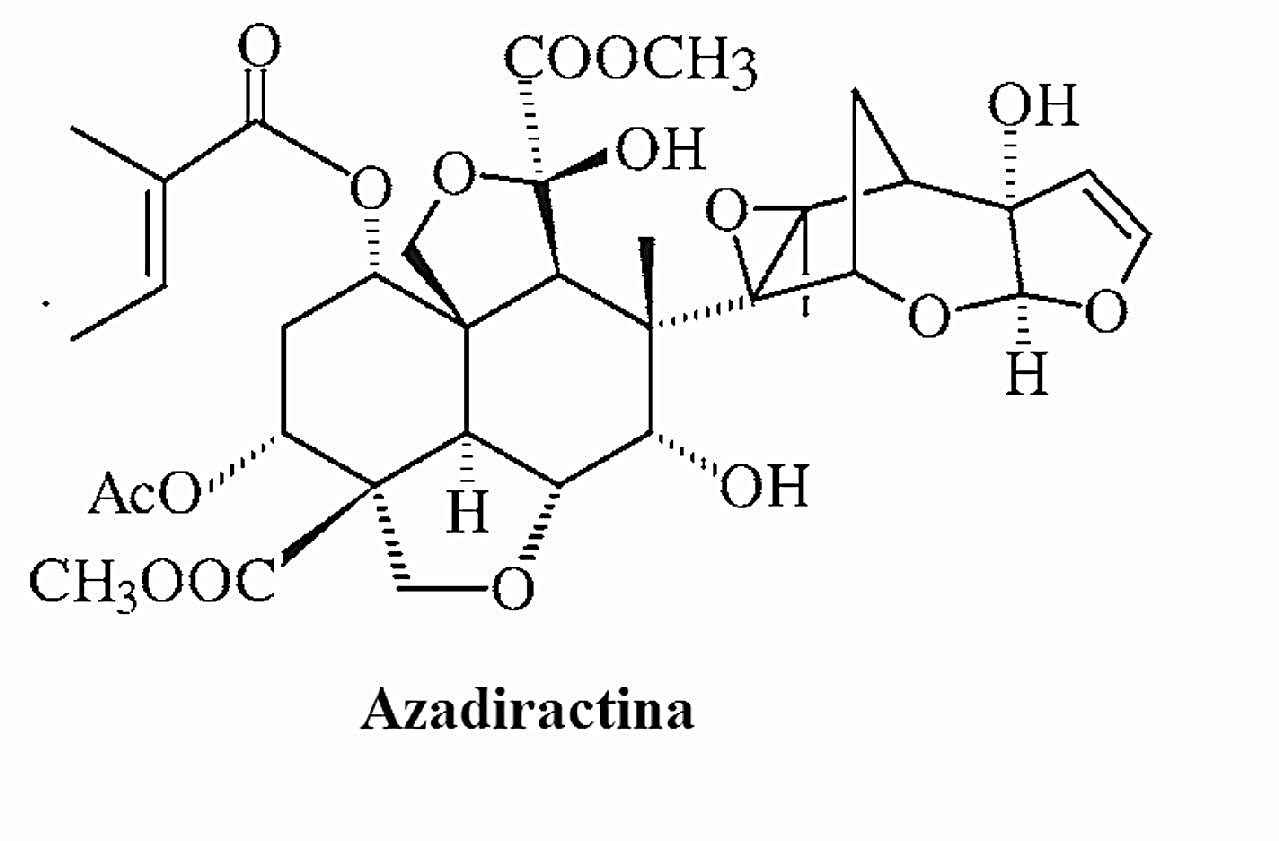
Afectaciones a la salud humana, contaminación ambiental y la presencia de residuos tóxicos en los alimentos son algunos de los tantos inconvenientes que aparecen con el uso de plaguicidas sintéticos y las razones por los que desde la década de los noventa se ha generalizado a nivel mundial el empleo de plaguicidas naturales de origen vegetal. Las piretrinas, la azadiractina y los aceites esenciales se reafirman como plaguicidas naturales de gran efectividad y mínimos efectos adversos. Las características de los principales plaguicidas de origen vegetal actualmente en uso –mecanismo de acción, toxicidad y tendencias actuales– se exponen en este trabajo para hacer de estos una alternativa ecológica y eficaz a tener en cuenta.
Detalles del artículo

Esta obra está bajo una licencia internacional Creative Commons Atribución-NoComercial 4.0.
Aquellos autores/as que tengan publicaciones con esta revista, aceptan los términos siguientes de la Licencia CC Reconocimiento-NoComercial 4.0 Internacional (CC BY-NC 4.0):
Usted es libre de:
- Compartir — copiar y redistribuir el material en cualquier medio o formato
- Adaptar — remezclar, transformar y crear a partir del material
El licenciador no puede revocar estas libertades mientras cumpla con los términos de la licencia.
Bajo las condiciones siguientes:
- Reconocimiento — Debe reconocer adecuadamente la autoría, proporcionar un enlace a la licencia e indicar si se han realizado cambios. Puede hacerlo de cualquier manera razonable, pero no de una manera que sugiera que tiene el apoyo del licenciador o lo recibe por el uso que hace.
- NoComercial — No puede utilizar el material para una finalidad comercial.
- No hay restricciones adicionales — No puede aplicar términos legales o medidas tecnológicas que legalmente restrinjan realizar aquello que la licencia permite.
La revista no se responsabiliza con las opiniones y conceptos emitidos en los trabajos, son de exclusiva responsabilidad de los autores. El Editor, con la asistencia del Comité de Editorial, se reserva el derecho de sugerir o solicitar modificaciones aconsejables o necesarias. Son aceptados para publicar trabajos científico originales, resultados de investigaciones de interés que no hayan sido publicados ni enviados a otra revista para ese mismo fin.
La mención de marcas comerciales de equipos, instrumentos o materiales específicos obedece a propósitos de identificación, no existiendo ningún compromiso promocional con relación a los mismos, ni por los autores ni por el editor.
Cómo citar
Referencias
Antonious, G. F.: «Residues and Halflives of Pyrethrins on Field-Grown Pepper and Tomato», J. Environ. Sci. Health. 39: 491-503, EE. UU., 2004.
Barre, J. T.; B. F. Bowden; J. C. Coll; J. Dejesus; V. E. de la Fuente: «A Bioactive Triterpene from Lantana camara, L.», Phytochemestry 45 (2): 321-324, EE. UU., 1997.
Barton, D. H. R. , P. De Mayo, J. C. Orr: «The Nature of Lantadene A», Triterpenoids Part XXIII J. Chem. Soc. pp 4160-4162, EE. UU., 1956.
Barua, A. K. y P. Chakrabarti: «The Structure and Streochemestry of Lantanilic Acid. A New Triterpene Isolated from Lantana camara», J. Indian Chem. Soc. 62 (4): 298-305,1985.
Begum, S.; A. Wahab; B. S.Siddiqui; F. Qamar: «Nematicidal Constituents of the Aerial Parts of Lantana camara», J. Nat. Prod. 63 (6): 765- 767, Pakistán, 2000.
Betarbet, R.; T. B. Sherer; G. MacKenzie; M. Garcia-Osuna; A. V. Panov; J. T. Greenamyre: «Chronic Systematic Pesticide Exposure Reproduces Features of Parkinson’s Disease», Nat. Neurosci. 3 (12): 1301-1306, EE. UU., 2000.
Bomford, M. K.; M. B. Isman: «Desensitization of Fifth Instar Spodoptera Litura (Lepidoptera: Noctuidae) to Azadirachtin and Neem», Entomol. Exp. Appl. 81: 307-313, Bélgica, 1996.
Cabizza, M.; A. Angioni; M. Melis; M. Cabras; C. V. Tuberoso; P. Cabras: «Rotenone and Rotenoids in Cub´e Resins, Formulations and Residues on Olives», J. Agric. Food Chem. 52: 288-293, EE. UU., 2004.
Caboni, P.; M. Cabras; A. Angioni: M. Russo: «Persistence of Azadirachtin Residues on Olives After Field Treatment», J. Agric. Food. Chem. 50: 2576-2580, 2002.
Cabras, P.; P. Caboni; M. Cabras; A. Angioni; M. Russo: «Rotenone Residues on Olives and in Olive Oil», J. Agric. Food. Chem. 50: 2576-2580, EE. UU., 2002.
California Department of Pesticide Regulation: Summary of Pesticide Use Report Data 2003, Indexed by Chemical, EE. UU., 2005.
Carson, C. F., B. J. Mee; T. V. Riley: «Mechanism of Action of Melaleuca Alternifolia (Tea Tree) Oil on Staphylococcus Aureus Determined by Time-Kill, Lysis, Leakage, and Salt Tolerance Assays and Electron Microscopy», Antimicrob. Agents Chemother 48: 1914-1920, EE. UU., 2002.
Casanova, H.; C. Ortiz; C. Pelaez; A. Vallejo; M. E. Moreno; M. Acevedo: «Insecticide Formulations Based on Nicotine Oleate Stabilized by Sodium Caseinate», J Agric Food Chem. 50: 6389-6394, EE. UU., 2002.
Casida, J. E.; G. B. Quistad: «Pyrethrum Flowers: Production, Chemistry, Toxicology and Uses», Oxford Univ Press, EE. UU., 1995.
Cháves, A. B.: «Extractos vegetales con efecto fungicida, insecticida o nematicida», folleto informativo, Ministerio de Agricultura y Ganadería, Agencia de Servicios Agropecuarios de Coronado, Venezuela. 2008.
Cox, S. D.; C. M. Mann; J. L. Markham; H. C. Bell; J. E. Gustafson; J. R. Warmington; S. G. Wyllie: «The Mode of Antimicrobial Action of the Essential Oil of Melaleuca Alternifolia (Tea Tree Oil)», J. Appl. Microbiol. 88: 170-175, 2000.
Deena, M. J.; J. E. Thoppil: «Antimicrobial Activity of the Essential oil of Lantana», Fitoterapia 71 (4): 453-455, Holanda, 2000.
Duke, J.: Handbook of phytochemical constituent of Grass herbs and other economic plants, Boca Raton, Fl., CRC Press, EE. UU., 2000.
Enan, E.: «Insecticidal Activity of Essential Oils: Octopaminergic Sites of Action», Comp. Biochem. Physiol. 130C: 325-337, Inglaterra, 2001.
Estrada, J. O.: «Potencialidades del uso del nim y sus bioproductos en la producción agropecuaria ecológica y sostenible», Agricultura Orgánica 3: 18-21, Cuba, 2002.
Fang, N.; J. Casida: «Anticancer Action of Cub´e Insecticide: Correlation for Rotenoid Constituents Between Inhibition of NADH-Ubiquinone Oxidoreductase and Induced Ornithine Decarboxylase Activities», Proc. Natl. Acad. Sci. 95: 3380-3384, EE. UU., 1998.
Florez, L. M. A.; V. S. Mesa: «Pruebas de actividad biológica con dos organismos modelos en acetogeninas de Annonaceae con actividad biopesticida», tesis para optar por el grado de Máster en Química Agrícola, Universidad Tecnológica de Perira, 2007.
Gottfried, K. y Kissman: Plantas infectantes y nocivas, t. 3, BASF, Brasil, 1995.
Dua, V. K.; N. C. Gupta; A. C. Pandey; V. P. Sharma: «Repellency of Lantana camara L. Flowers Against Aedes mosquitoes», J. Am. Mosq. Control. Assot. Sep., 12 (3): 406-408, EE. UU., 1996.
Hayes, W. J.: Herbicides. Pesticides Studied in Man. Williams & Wilkins (Eds.), Baltimore/Londres, 1982.
Hedin, P. A.; R. M. Hollingworth; E. P. Masler; J. Miyamoto; D. G. Thompson: «Phytochemicals for Pest Control», Am. Chem. Soc., EE. UU., 1997.
Inada, A.; T. Nakanishi; H. Tokuda; H. Nishino: «Inhibitory Efects of Lantadenes and Related Triterpenoids on Epstein-Barr virus Activation», Plant Med., Dec., 61 (6): 558-559, EE. UU., 1995.
Isman, M. B.: «Pesticides Based on Plant Essential Oils», Pestic. Outlook 10: 68-72, Inglaterra, 1999.
Isman, M. B.: «Plant Essential Oils for Pest and Disease Management» Crop. Prot. 19: 603-608, EE. UU., 2000.
Isman, M. B.: «Botanical Insecticides, Deterrents and Repellents in Modern Agriculture and an Increasingly Regulated World», Annu. Rev. Entomol. 51: 45-66, EE. UU., 2006.
Isman, M. B.; S. Miresmailli; C. Machial: «Commercial Opportunities for Pesticides Based on Plant Essential Oils in Agriculture, Industry and Consumer Products», Phytochem. Rev. 10: 9170-9174, Alemania, 2010.
Johnson, H. A.; N. H. Oberlies; F. Q. Alali; J. L. McLaughlin: «Thwarting Resistance: Annonaceous Acetogenins as New Pesticidal and Antitumor Agents», Biologically Active Natural Products: Pharmaceuticals, Boca Raton, Fl., CRC Press, 1999.
Kostyukovsky, M.; A. Rafaeli; C. Gileadi; N. Demchenko; E. Shaaya: «Activation of Octopaminergic Receptors by Essential Oil Constituents Isolated from Aromatic Plants: Possible Mode of Action Against Insect Pests», Pest. Manag. Sci. 58: 1101-1106, EE. UU., 2002.
Kraus, W.: «Azadirachtin and other Triterpenoids», The Chemistry and Action of Insecticides, Nueva York, 2002.
Londershausen, M.; W. Leight; F. Lieb; H. Moeschler: «Molecular Mode of Action of Annonins», Pestic. Sci. 33: 427-438, EE. UU., 1991.
Marco, G. J.; R. M. Hollingworth; W. Durham (eds.): Silent Spring Revisited, American Chemical Society, Washington, EE. UU., 1987.
Mehta, P. K.; D. N. Vaidya; N. P. Kashyap: «Antifeeddant Propierties of Some Plant Extracts Against Brinjal Hadda Beetle, Henosepilachna vigintoctopunctata F.», J. Entomol. Res. 19 (2): 147-150, EE. UU., 1995.
McLaughlin, J. L.; L. Zeng; N. J. Oberlies; D. Alfonso; B. A. Cummings; J. Johnson: «Annonaceous Acetogenins As New Natural Pesticides: Recent Progress», Am. Chem. Soc. 23: 117-133, EE. UU., 1997.
Misra, G.; S. G. Pavlostathis: «Biodegradation Kinetics of Monoterpenes in Liquid and Soil-Slurry Systems», Appl. Microbiol. Biotechnol. 47: 572-577, Alemania, 1997.
National Research Council: Neem, A Tree for Solving Global Problems, Nat. Acad. Press, 1992.
Naumann, K.; M. B. Isman: «Toxicity of Neem (Azadirachta indica A. Uss.) Seed Extracts to Larval Honeybees and Estimation of Dangers from Field Applications», Am. Bee. J. 136: 518-520, EE. UU., 1996.
Pérez, N.; L. Vázquez: «Manejo ecológico de plagas», Transformando el campo cubano. Avances de la agricultura sostenible, ACTAF, La Habana, 2001.
Perry, A. S.; I. Yamamoto; I. Ishaaya; R. Y. Perry: «Insecticides in Agriculture and Environment: Retrospects y Prospects», SpringerVerlag, Alemania, 1998.
Regnault-Roger, Catherine; B. J. R. Philogéne & C. Vincent (Edts.): Biopesticides of Plant Origin, Intercept-Lavoisier, Francia, 2005.
Pino, P. O,; L. F. Jorge; M. J. E. Tacoronte; B. P. S. Khambay: «Aislamiento y caracterización de compuestos activos de Mammea americana L.», Revista Cubana de Química 19 (1): 74-77. 2007.
Pino, P. O.; L. F. Jorge; D. O. León; B. P. S. Khambay; C. Branford-White: «Cuban Flora As a Source of Bioactive Compounds», The International Journal of Cuban Studies 2 (1): 1-9, Inglaterra, 2008.
Pittarelli, G. W.; J. G. Buta; J. W. Neal; R. M. Waters; W. R. Lusby: «Insecticide effect of Nicotiana tabacum», J. Pharmacol. 54 (2): 867-871, Inglaterra, 1993.
Priestley, C. M.; E. M. Williamson; K. A. Wafford; D. B. Sattelle: «Thymol, a Constituent of Thyme Essential Oil, Is a Positive Allosteric Modulator of Human GABAA Receptors and a Homo Oligomeric GABA Receptor From Drosophila Melanogaster», J. Pharmacol. 140: 1363-1372, Inglaterra, 2003.
Quarles, W.: «EPA Exempts Least-Toxic Pesticides», IPM Pract.: the Newsletter of Integrated Pest Management 18 (9): 16-17, EE. UU., 1996.
Rajavel, D.S.: «The Phytofagus Insect on Lantana in Brazil and Their Potential for Biological Control in Australia», J. South-Indian Horticultura 37 (3): 231-236, 1989.
Reddy, G. V.: «Biodeterioration of Cultural Property», Proceeding of the International Conference on Biodeterioration of Cultural Property, National Research Laboratory for Conservation of Cultural Property, Feb. 20-25, India, 1989.
Roig, J. T.: «Plantas medicinales, aromáticas o venenosas de Cuba, Ed. Ciencia y Técnica, La Habana, 1974.
Roy, S.; A. K. Barua: «The Structure and Stereochemistry of a Triterpene Acid from Lantana camara», Phytochemistry 24 (7): 1607-1608, EE. UU., 1985.
Shaheen, S. B.; M. Raza; S. Begum; S. Siddiqui; S. Firdous:«Pentacyclic Triterpenoid from Lantana camara», Phytochemistry 38 (3): 681-687, EE. UU., 1995.
Schmutterer, H.: The Neem Tree. Neem Found., Mumbai, India, 2002.
Sharma, O. P.; H. P. Makkar; R. N. Pal; S. S. Negi: «Fragility of Erythrocytes in Animals Affected by Lantana Poisoning», Clin. Toxicol. 18 (1): 25- 35, EE. UU., 1981.
Sharma, O. P.; R. K. Dawra; P. P. S. Makkar: «Isolation and Partial Purification of Lantana camara toxins», Toxicol. Lett. 37 (2): 165- 172, Inglaterra, 1987.
Sharma, O. P.; S. Sharma; R. K. Dawra: «Reversed-Phase High Performance Liquid Chromatographic Separation and Cuantification of Lantadenis Using Isocratic Systems», J. Chromatografic 786: 181- 184, EE. UU., 1997.
Stein, U.; F. Klingauf:«The Weed Lantana camara, L. and the Insect Natural Enemies Imported for its Biological Control into South Africa», J. of Applied Entomology 110 (2): 124-129, EE. UU., 1990.
Stroh, J.; M. T. Wan; M. B. Isman; D. J. Moul: «Evaluation of the Acute Toxicity to Juvenile Pacific Coho Salmon y Rainbow Trout of Some Plant Essential Oils, a Formulated Product and the Carrier», Bull. Environ. Contam. Toxicol. 60: 923-930, EE. UU., 1998.
Suárez, P. J.; J. S. Padrón; G. Dierskmeier; A. Bécquer; M. Martínez; C. Cruz; R. Capote; G. Ramírez; M. Casanova; L. Hams; P. Nápoles: «Generalización del empleo de cal y nicotina en Cuba», Fitosanidad 12: (3): 185-186, Cuba, 2008.
Thacker, J. M. R.: An Introduction to Arthropod Pest Control, Cambridge Univ Press, Inglaterra, 2002.
Ttyniemi, L. K.: «Evaluation of the Use of Insect for Biological Control of Lantana camara L. (Verbenaceae) in Zambia», Trop. Pest. Management 28: 14-18, EE. UU., 1982.
Wan, M. T.; R. G. Watts; M. B. Isman; R. Strub: «An Evaluation of the Acute Toxicity to Juvenile Pacific Northwest Salmon of Azadirachtin, Neem Extract and Neem-Based Products», Bull. Environ. Contam. Toxicol. 56: 432-439, EE. UU., 1996.
Ware, G. W.: Pesticides. Theory and Application. W. S. Freeman (ed.), EE. UU, 1983.
Weinzierl, R. A.: «Botanical insecticides, soaps, and oils», Biological and Biotechnological Control of Insect Pests, J. E. Rechcigl & N. A. Rechcigl (eds.), Lewis Publishers, Boca Raton, Florida, 2000.
Zambrana, T.; M. A. Fernández: «Recursos fitogenéticos autóctonos y manejo de la biodiversidad» ACPA, Producción e Industria Animal 22 (2): 27-30, Cuba, 2003.